
Slow Cooker Pot Roast

A tender, fall apart pot roast cooked all day in the slow cooker with carrots, potatoes, and a savory broth — hands off comfort cooking for busy days.
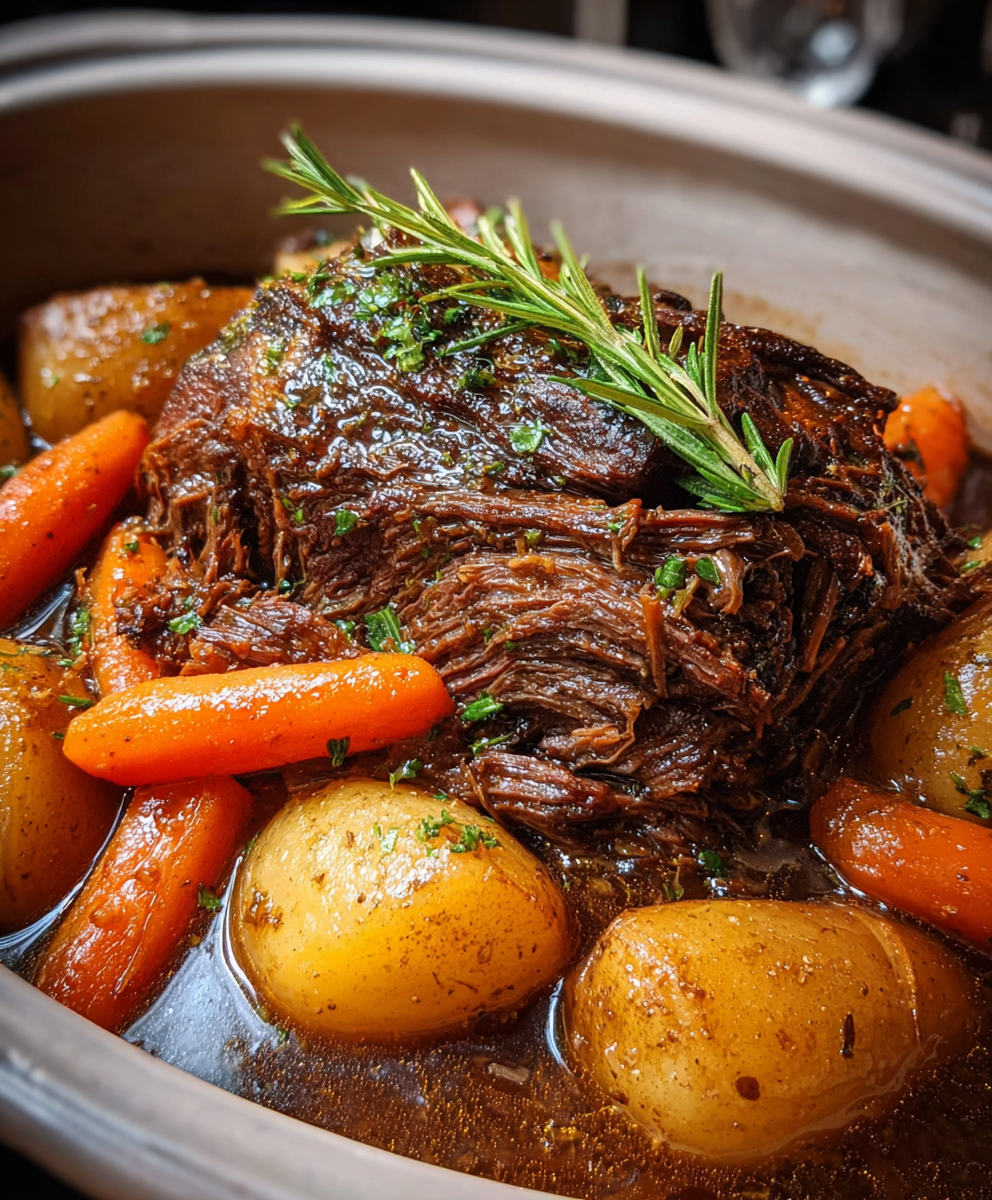
This pot roast slow cooker method has been my go to for simple Sunday dinners and busy weeknights when I want deep, comforting flavors without standing over the stove. I discovered this combination while helping my grandmother clear out her pantry one autumn afternoon and realized a modest chuck roast, a few pantry staples, and low slow heat could produce a meal that always gathered the family around the table. The meat becomes silky and tender, the vegetables soak up the braising juices, and the kitchen fills with an aroma that draws everyone in the house. Over the years I refined timing, searing technique, and the vegetable arrangement so you get consistent, tender results every time.
What makes this approach special is its simplicity and reliability. A good sear builds flavor through Maillard reaction, then the slow cooker transforms the collagen in the chuck into gelatin, giving the juices a rich mouthfeel without extra effort. The vegetables cook alongside the meat, balanced so the potatoes do not disintegrate while the roast reaches fork tender status. This is the kind of meal where leftovers taste even better the next day because the flavors continue to mature. It has become our comforting staple for family gatherings and calm weeknights alike.
Why You'll Love This Recipe
- Hands off slow cooking delivers reliably tender meat with minimal active time, perfect for busy schedules or hosting while spending time with guests.
- Uses pantry and market staples: chuck roast, carrots, potatoes, and simple seasonings that are easy to find year round.
- Flexible timing: cook on low for eight hours or on high for four to five hours and still get fork tender results.
- One pot convenience with the slow cooker means fewer dishes and great make ahead potential; leftovers store and reheat beautifully.
- Balanced meal in one vessel with hearty vegetables that absorb the braising liquid for rich flavor in every bite.
- Great for feeding a crowd: scale up the cut and extend cooking time slightly for larger roasts without compromising texture.
In my experience the family always asks for seconds and sometimes thirds. When I bring this to potlucks, people ask for the recipe because the roast is tender but not mushy and the vegetables are perfectly flavored. Searing the meat first became a small ritual that made a big difference in color and depth of flavor.
Ingredients
- Chuck roast: Use a three to four pound well marbled chuck roast for the most tender, flavorful result. Look for even marbling and an even thickness so it cooks uniformly. Brands with grass fed labeling can alter flavor; choose what you prefer. Trim excessive fat but leave a thin layer to keep the meat moist.
- Olive oil: One tablespoon of extra virgin olive oil or a neutral oil such as canola for searing. The oil raises the smoke point slightly and helps develop a brown crust on the roast.
- Onion: One large onion sliced into rings. Yellow onion is ideal for its balance of sweetness and savory flavor that dissolves into the braising liquid.
- Carrots: Four carrots cut into large chunks. Use firm carrots so they hold their shape during long cooking; baby carrots work in a pinch but may soften sooner.
- Gold potatoes: Four gold potatoes quartered. Yukon gold maintains a creamy texture and holds together better than russet during slow cooking.
- Garlic: Three cloves, minced. Fresh garlic gives the best aroma; add it to the vegetables so the flavor disperses rather than burning in the skillet.
- Beef broth: Two cups of good quality beef broth or stock. Low sodium broth gives you control over final seasoning.
- Worcestershire sauce: One tablespoon adds umami depth and a subtle tang; it pairs naturally with beef.
- Seasonings: One teaspoon salt, one half teaspoon black pepper, one teaspoon dried thyme and one bay leaf. Adjust salt to taste and consider finishing salt at the table if needed.
Instructions
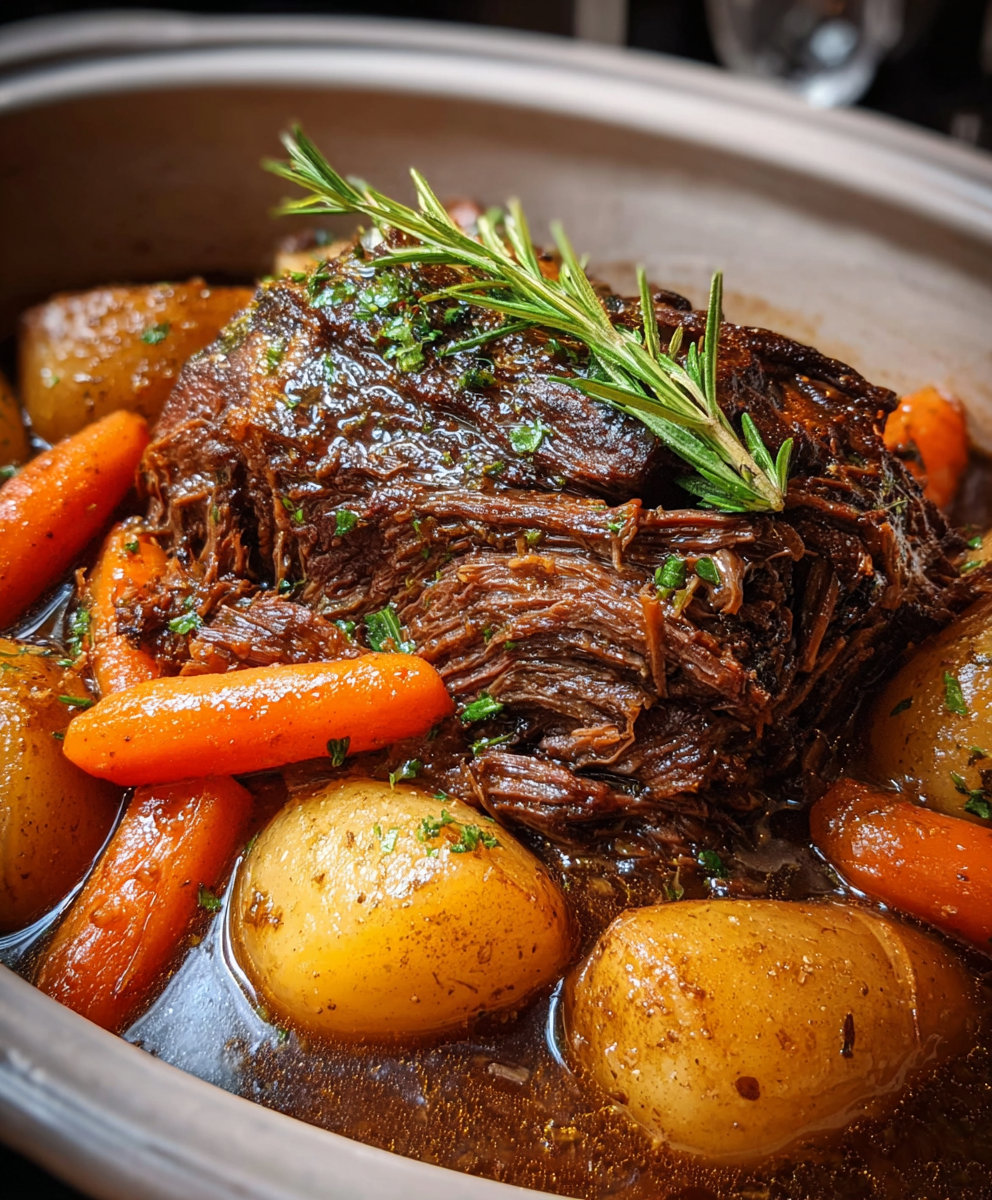
Step 1 Prepare and season the meat: Pat the roast completely dry with paper towels to ensure good browning. Season generously on all sides with one teaspoon of salt and one half teaspoon of black pepper. Dry surface and seasoning promote a deeper Maillard crust during searing which adds rich flavor to the final braise. Let the roast rest at room temperature for 10 minutes if you have time. Step 2 Sear the roast: Heat one tablespoon of olive oil in a heavy skillet over medium high heat until shimmering. Sear the roast two to three minutes per side until a deep brown crust forms. Use tongs to rotate and sear edges as needed. Searing is not about cooking through but about building flavor; do not overcrowd the pan. If the roast is larger than your skillet, sear in two batches or use a larger pan. Step 3 Layer vegetables in slow cooker: Place the sliced onion, carrots cut into large chunks, and quartered gold potatoes into the bottom of a six quart or larger slow cooker. This vegetable bed lifts the meat so the roast cooks in the circulating heat and juices and prevents bottom scorching. Spread the vegetables evenly for consistent cooking. Step 4 Add aromatics: Sprinkle the minced garlic, one teaspoon of dried thyme, and the bay leaf over the vegetables. Garlic placed with vegetables will mellow and infuse the cooking liquid without burning. If using fresh thyme, add two sprigs tied together instead of the dried measure. Step 5 Place roast and add liquid: Carefully set the seared roast on top of the vegetable layer. In a small bowl whisk together two cups of beef broth and one tablespoon of Worcestershire sauce. Pour the liquid around the sides of the roast so the top stays seasoned and the juices settle around the roast. Aim to fill the slow cooker to about one half to two thirds full but avoid submerging the roast completely; the steam and shallow braising are what produce the best texture. Step 6 Cook low and slow: Cover with the lid and cook on low for eight hours or on high for four to five hours. The roast is ready when a fork slides into the meat and it shreds easily. Time will vary with roast thickness and slow cooker model. For even cooking, avoid lifting the lid during the first three to four hours as heat loss can lengthen total time. Step 7 Rest and finish: Remove the bay leaf and transfer the roast to a cutting board. Let it rest ten minutes before slicing or shredding so juices redistribute. Skim excess fat from the cooking liquid if desired and spoon the vegetables and juices over the meat to serve. If you prefer a gravy, strain the liquid into a saucepan and reduce or thicken with a cornstarch slurry on the stove.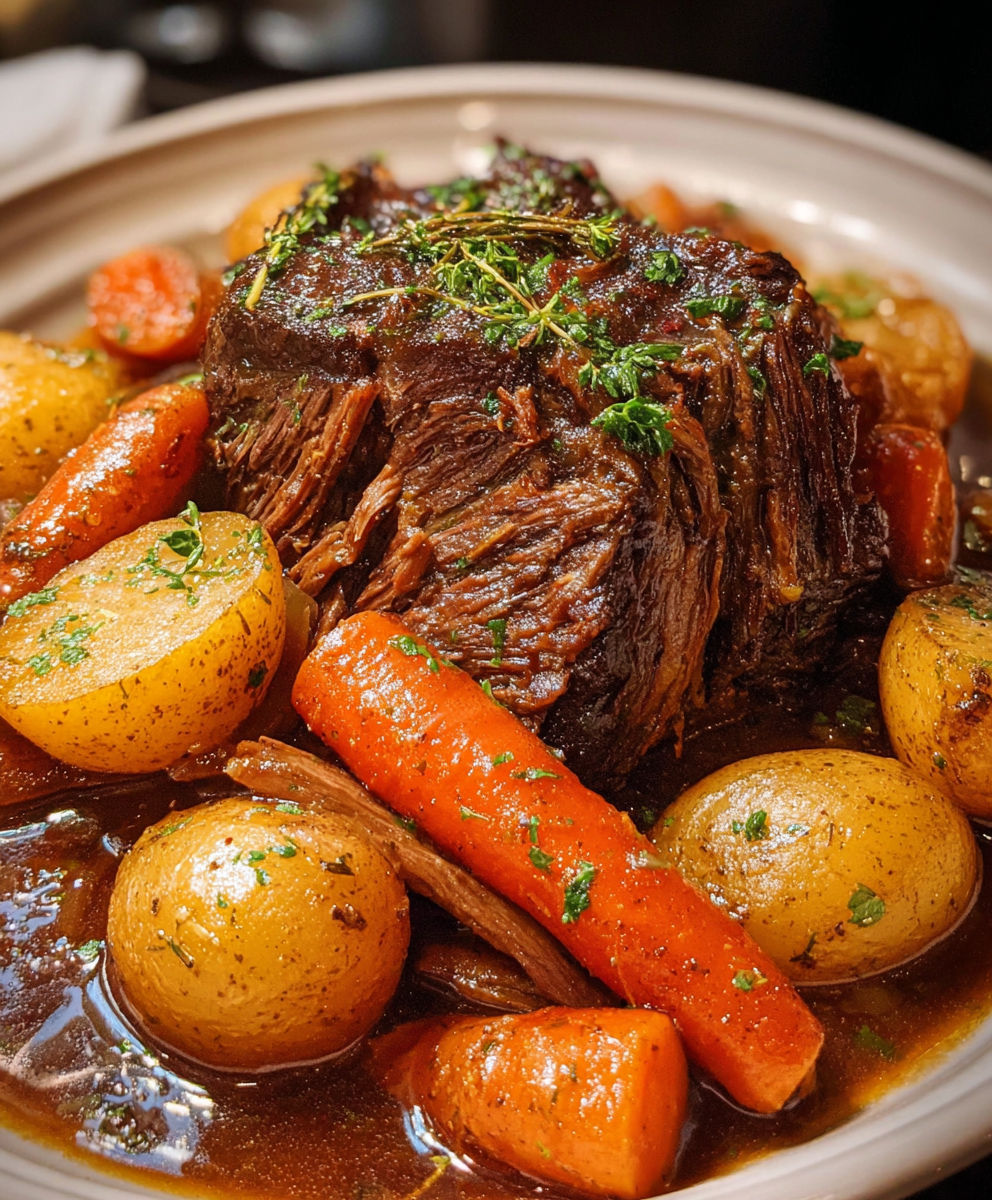
You Must Know
- Store leftovers in an airtight container in the refrigerator for up to three days or freeze for up to three months. Reheat gently to preserve texture.
- This is a protein rich dish with balanced carbohydrates from the potatoes and carrots, great as a complete family meal.
- Searing first is optional but highly recommended to add color and complexity through browning reactions.
- Many slow cookers run hot or cool; test yours with water to learn timing and make small adjustments to cook time.
My favorite part is how forgiving this method is. Even if I am late getting home, the low heat keeps the roast safe and ready, and the flavors continue to deepen. Whenever company comes over I can rely on this to look impressive with little last minute work.
Storage Tips
Cool leftovers to room temperature for no more than two hours then refrigerate in shallow airtight containers. For best quality, consume refrigerated portions within three days. To freeze, divide into meal size portions and place in freezer safe containers or vacuum sealed bags; label with date and freeze for up to three months. Thaw overnight in the refrigerator before reheating gently on the stovetop over low heat or in a 325 degree Fahrenheit oven until warmed through. Avoid repeated reheating; reheat only what you will eat in one sitting to maintain texture.
Ingredient Substitutions
If you do not have chuck roast you can use a blade roast or brisket but adjust cooking time slightly. For gluten free needs select a certified gluten free Worcestershire or replace it with one tablespoon of soy free tamari plus one teaspoon of balsamic vinegar. Swap Yukon gold potatoes for baby potatoes if you prefer smaller pieces; they will cook faster so cut larger pieces into halves instead of quarters. Use fresh thyme instead of dried at a two to one ratio by volume. For a lower sodium option use low sodium beef broth and adjust salt at the end.
Serving Suggestions
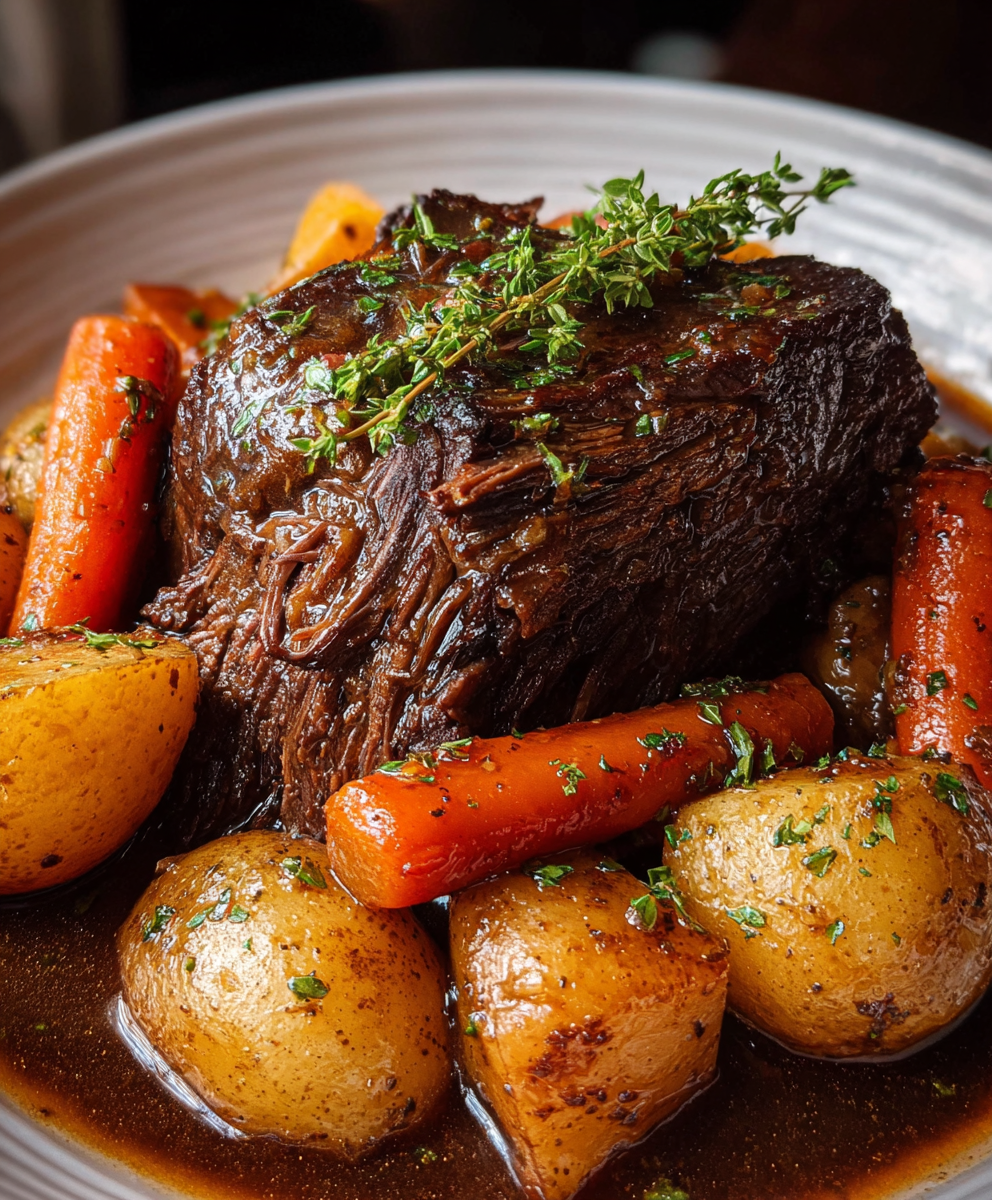
Serve slices or shredded pieces spooned over the cooked vegetables and finished with a ladle of braising liquid or a quick pan gravy. Pair with a crisp green salad or steamed green beans to add a bright counterpoint. For a heartier presentation offer warm dinner rolls or buttered egg noodles to mop up the juices. Garnish with chopped parsley for freshness and a scattering of cracked black pepper for bite. For special occasions serve on a warmed platter with roasted root vegetables for variety.
Cultural Background
This style of slow braising is rooted in European peasant techniques where tougher cuts were transformed into tender meals through long, slow cooking. Pot roast as known in American kitchens grew from those traditions and became a staple of comfort cooking in the 20th century when slow cookers added convenience. Variations exist across regions with different spice blends, wine or beer additions, and vegetable pairings reflecting local agriculture and cooking customs.
Seasonal Adaptations
In winter, add parsnips and turnips for earthier flavors and substitute rosemary for thyme for a woodsy note. In summer, lighten the dish by adding fresh tomatoes and a splash of red wine in the braising liquid and shorten cook time slightly for brighter vegetable texture. For holiday meals consider adding sliced chestnuts or a splash of soy free Worcestershire and finishing with a reduction of the braising liquid to make a glossy sauce.
Meal Prep Tips
For meal prep make the roast two to three days ahead and refrigerate. Portion into single meal containers with a mix of meat and vegetables plus a small cup of braising liquid to keep things moist when reheating. You can also shred the meat and freeze in two cup portions that thaw quickly for sandwiches, tacos, or to top mashed potatoes. Label everything clearly with date and contents to save time during busy weeks.
This pot roast slow cooker method is forgiving, deeply flavorful, and ideal for sharing with family and friends. I hope you make it part of your rotation and adapt it to your own tastes and traditions.
Pro Tips
Sear the roast until a deep brown crust forms to build flavor through the Maillard reaction.
Place vegetables on the bottom of the slow cooker to lift the roast and promote even cooking.
Avoid lifting the lid during the first half of the cook time to maintain steady braising heat.
Skim excess fat from the top of the braising liquid before serving or making gravy.
This nourishing slow cooker pot roast recipe is sure to be a staple in your kitchen. Enjoy every moist, high protein slice — it is perfect for breakfast or as a wholesome snack any time.
Tags
Slow Cooker Pot Roast
This Slow Cooker Pot Roast recipe makes perfectly juicy, tender, and flavorful steak every time! Serve with potatoes and a side salad for an unforgettable dinner in under 30 minutes.
Ingredients
Meat
Sear and seasoning
Vegetables
Braising liquid and aromatics
Instructions
Season and dry the roast
Pat the roast dry and season on all sides with salt and black pepper. Let rest for ten minutes if time allows to come closer to room temperature.
Sear the roast
Heat olive oil in a heavy skillet over medium high heat and sear the roast two to three minutes per side until deeply browned to develop flavor.
Arrange vegetables
Place sliced onion, carrots, and quartered potatoes in the bottom of a six quart slow cooker to create a vegetable bed for the roast.
Add aromatics and place roast
Sprinkle minced garlic, dried thyme, and bay leaf over vegetables. Place the seared roast on top of the vegetables.
Add braising liquid
Whisk together beef broth and Worcestershire sauce and pour around the sides of the roast, avoiding pouring directly on top.
Cook and finish
Cover and cook on low for eight hours or on high for four to five hours until fork tender. Remove bay leaf and rest the roast ten minutes before slicing.
Last Step: Please leave a rating and comment letting us know how you liked this recipe! This helps our business to thrive and continue providing free, high-quality recipes for you.
Nutrition
Did You Make This?
Leave a comment & rating below or tag
@solushcooks on social media!
Categories:
You might also like...

Air-Fried Pizza Rolls
Crispy, golden pockets of melted mozzarella and pepperoni made in the air fryer for a quick party snack or weeknight treat.
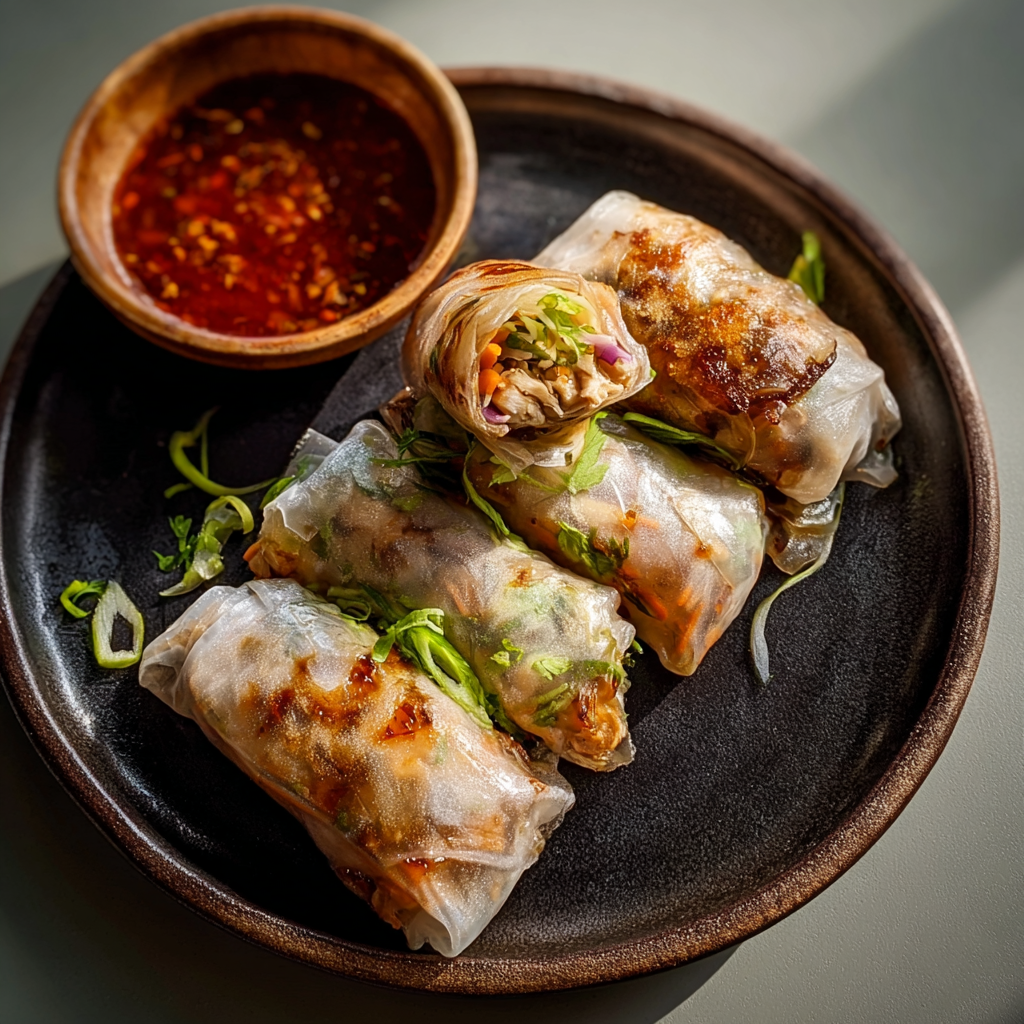
Air-Fried Rice Paper Noodle Rolls
Crispy, light rice paper rolls filled with vermicelli, vegetables and tofu or shrimp, finished in the air fryer for a healthy, snackable treat.
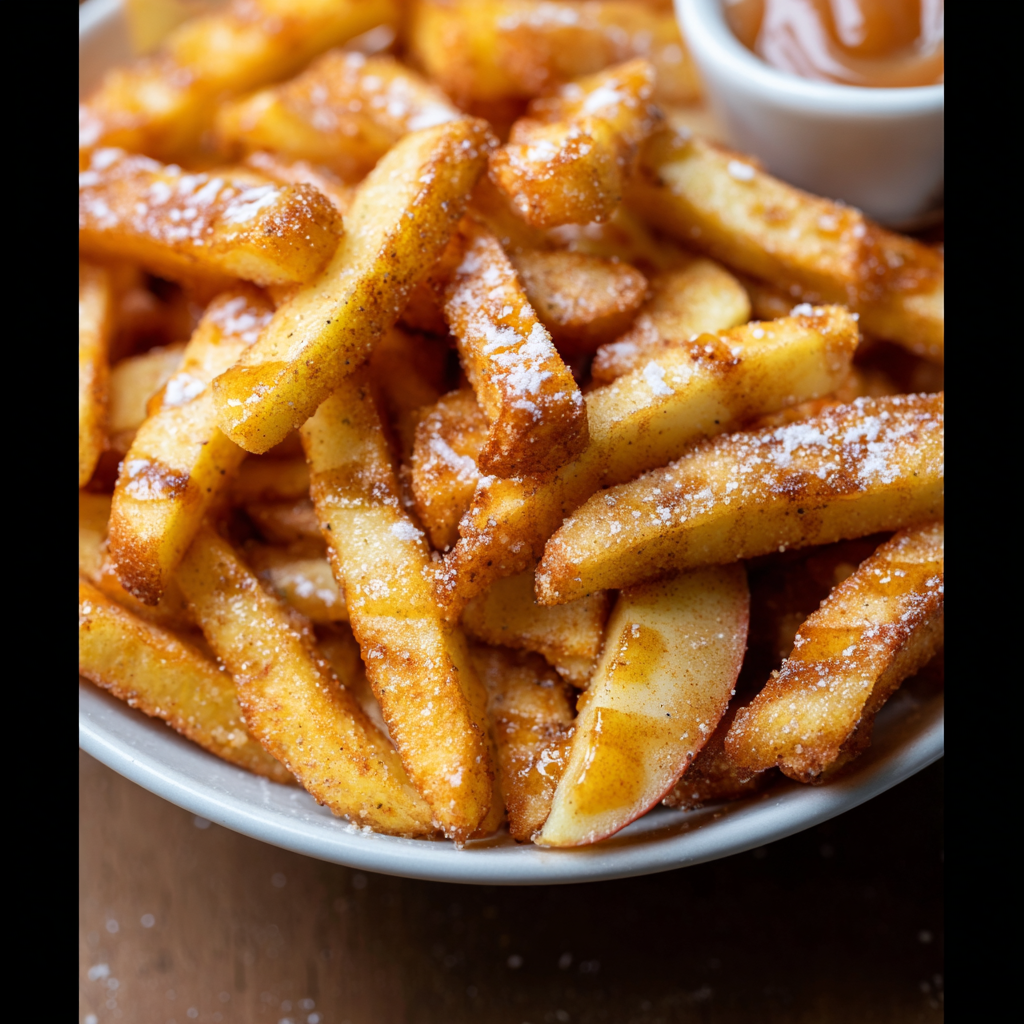
Air Fryer Apple Fries
Crispy, cinnamon-sugar coated apple fries made in the air fryer — a quick, family-friendly snack or dessert ready in under 30 minutes.
Did You Make This?
Leave a comment & rating below or tag @solushcooks on social media!
Rate This Recipe
Share This Recipe
Enjoyed this recipe? Share it with friends and family, and don't forget to leave a review!
Comments (1)
This recipe looks amazing! Can't wait to try it.
Comments are stored locally in your browser. Server comments are displayed alongside your local comments.

Hi, I'm Lena!
What's Popular
30-Minute Meals!
Join to receive our email series which contains a round-up of some of our quick and easy family favorite recipes.